


10 Jul Why Does Your Air Conditioner Smell Bad? Common Causes and Easy Fixes
Many homeowners in Singapore rely on air conditioning almost every day due to the hot and humid climate. However, frequent use can create an ideal environment for dust, moisture, mould and bacteria to build up inside the unit. Over time, this buildup may reduce cooling performance and cause unpleasant odours to circulate throughout your home.
Whether your air conditioner smells musty, burnt or sour like vinegar, the odour is often a sign that the system needs attention. Some smells can be resolved with simple cleaning and maintenance, while others may indicate a more serious problem that requires professional aircon servicing.
Understanding what each smell means and what may be causing it can help you address the issue early, before it affects your comfort, indoor air quality or repair costs.
In this guide, we’ll explain why your air conditioner smells bad, the most common types of aircon odours, their possible causes, and the practical steps you can take to keep your unit clean, efficient, and fresh.
Table of Contents
Why Does Your Air Conditioner Smell Bad?
Your air conditioner constantly draws in indoor air, cools it, and circulates it back into your room. During this process, dust, moisture, pet hair, pollen, and other airborne particles are trapped inside various components such as the air filter, evaporator coil, and drainage system.
Singapore’s humid weather makes this even more challenging. Moisture that remains inside the unit creates an ideal environment for mould, mildew, and bacteria to grow. As these microorganisms multiply, they produce unpleasant odours that spread every time the air conditioner is switched on.
Not every smell has the same cause. Some indicate simple maintenance issues, while others may point to electrical faults or refrigerant leaks. Identifying the type of smell is often the first step towards finding the right solution.
Common Air Conditioner Smells and Their Causes
1. Musty or Moldy Smell
A musty smell is one of the most common complaints among air conditioner owners. It usually indicates mould or mildew growing inside the unit due to trapped moisture.
This often happens when the air filter, evaporator coil or drain pan remains damp for an extended period. A clogged air filter can restrict airflow and trap more dust and moisture, while a dirty evaporator coil may develop a layer of grime that allows mould and bacteria to grow.
Singapore’s warm and humid climate can make this problem more common, especially when the air conditioner is used frequently or has not been serviced for a long time. Whenever the system operates, air passes over these contaminated components and carries the unpleasant odour into the room.
2. Electrical or Burning Smell
A burning smell should never be ignored. This type of odour may indicate overheating electrical components, damaged wiring, worn insulation or a failing motor.
Dust that has accumulated around electrical parts may sometimes produce a brief burnt smell when the unit is switched on. However, a strong or persistent burning odour is more likely to indicate an electrical fault.
If you notice a burning smell shortly after turning on your air conditioner, switch off the unit immediately. Continuing to operate the system could increase the risk of equipment damage or even electrical hazards. A qualified technician should inspect the unit before it is used again.
3. Gas or Chemical Smell
If your air conditioner produces a chemical-like smell, it may be related to a refrigerant leak or another issue involving internal components. Refrigerant is the cooling fluid that circulates through the system to absorb heat and keep the room cool.
Leaks may occur because of corroded pipes, loose connections, worn seals or damaged refrigerant lines. Although modern refrigerants are generally odourless, leaking refrigerant mixed with compressor oil or other contaminants can sometimes create unusual chemical smells.
Since refrigerant handling requires specialised equipment and proper certification, professional servicing should be arranged as soon as possible.
4. Vinegar or Sour Smell
A sour or vinegar-like smell often develops when bacteria accumulate inside the drainage system or condensation drain pan.
As the air conditioner removes moisture from indoor air, condensation collects in the drain pan before flowing out through the drain line. If the drain line becomes clogged with dust, algae or slime, water may remain trapped inside the unit.
Standing water mixed with organic debris creates a suitable environment for bacteria and mould to grow. Over time, this buildup produces an acidic odour that becomes noticeable whenever the air conditioner is running. A blocked drainage system may also cause water leakage from the indoor unit.
5. Rotten or Foul Smell
A rotten or foul smell coming from your air conditioner often indicates that a small insect, lizard, rodent, or other pest has entered the unit and died inside. This type of odour is usually strong enough to be noticed as soon as the air conditioner is switched on.
As air flows through the system, the smell is carried throughout the room, making the space uncomfortable. Dead pests can become trapped in areas such as the blower, air filter, drain pan, or other internal components, where they gradually decompose.
Besides the unpleasant odour, a dead pest can contaminate parts of the air conditioning system and affect indoor air quality. To completely eliminate the smell and prevent hygiene issues, it is recommended to have the unit professionally inspected, cleaned, and sanitised.
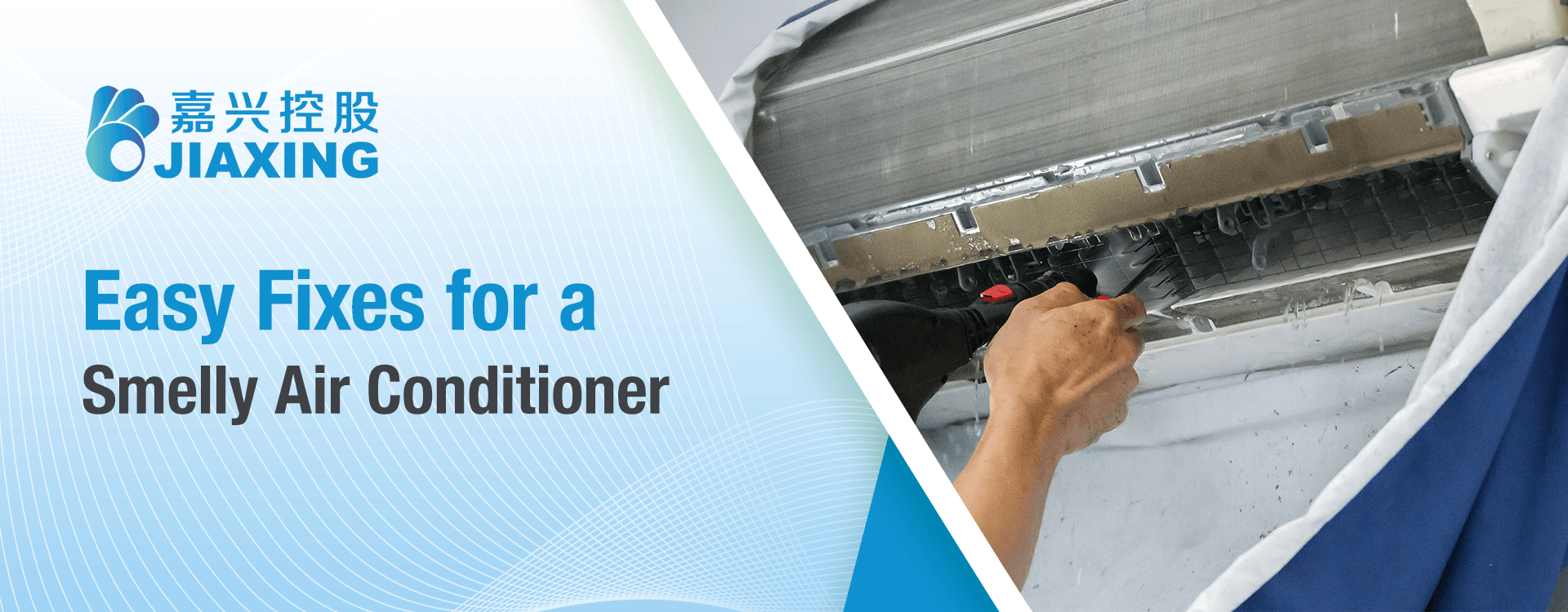
Easy Fixes for a Smelly Air Conditioner
A bad smelling air conditioner does not always mean you need a costly repair. In many cases, the problem can be resolved with regular cleaning and proper maintenance. The key is to identify the source of the odour and address it before it develops into a more serious issue. Here are some practical steps you can take to keep your air conditioner smelling fresh and operating efficiently.
1. Clean or Replace the Air Filter
A dirty air filter is one of the easiest problems to check. When dust builds up on the filter, it can trap moisture, restrict airflow and create a stale or musty smell.
If the filter is washable, rinse it gently with clean water and allow it to dry completely before reinstalling it. A damaged, heavily stained or worn-out filter should be replaced instead of reused.
Cleaning the filter regularly also helps the air conditioner circulate air more efficiently and reduces the amount of dirt that reaches the internal components.
2. Clear the Drain Line
The drain line carries condensation away from the indoor unit. When it becomes blocked by dust, algae, or slime, water can become trapped inside the system and start producing a sour or unpleasant smell.
You can check whether the drainage is working properly by observing the outdoor end of the drain pipe while the air conditioner is running. If little or no water is flowing out, or if you notice water leaking from the indoor unit, it may indicate a blockage in the drainage system. Hence, you may need to inspect or have the drain line flushed to restore proper water flow and prevent stagnant water from building up inside the unit.
3. Clean the Condensation Drain Pan
The drain pan collects moisture from the evaporator coil before it flows into the drainage pipe. Over time, dust and stagnant water can form a thin layer of sludge, which may lead to unpleasant odours.
If the drain pan is accessible, remove any visible dirt and wipe the surface thoroughly before bacteria have a chance to multiply. Also check that the pan is not cracked, overflowing, or holding water after the unit has stopped running. If it continues to fill with water repeatedly, this may indicate a deeper drainage issue rather than a simple surface cleaning problem.
In such cases, it is best to engage experienced technicians, as they have the proper tools and expertise to clean internal components that are not reachable during routine maintenance.
4. Regular aircon cleaning and maintenance
Professional aircon cleaning can help remove dust, mould, bacteria and other buildup from areas that are difficult to reach, such as the evaporator coil, blower wheel and drainage system. It is especially helpful for homeowners who are unfamiliar with aircon components, as a trained technician can safely inspect the unit, identify the source of the smell and check for issues before they become more serious. Routine aircon maintenance also helps prevent unpleasant odours from returning and improves airflow and cooling performance.
Can a Smelly Air Conditioner Affect Your Health?
1. Poor Indoor Air Quality
When an air conditioner is not properly maintained, it can circulate dust, bacteria, mould spores, and other airborne particles back into your living space. Over time, this can reduce indoor air quality and make the environment feel stuffy and less comfortable to stay in.
2. Allergy and Respiratory Problems
For individuals with asthma, allergies, or sensitive respiratory systems, exposure to contaminated air can trigger symptoms such as sneezing, coughing, nasal congestion, itchy eyes, or throat irritation. Children and elderly family members are usually more sensitive, making clean indoor air even more important for household comfort and wellbeing.
3. Unpleasant Living Environment
Even if the odour itself is not directly harmful, a smelly air conditioner can still affect daily comfort and overall living experience. It may make your home feel less fresh and welcoming, and in some cases, even create a negative impression for visitors.
Conclusion
A bad smell coming from your air conditioner is more than just an inconvenience. It is often an early warning sign that something inside the system requires attention. Whether the cause is a dirty air filter, mould growth, blocked drainage, a contaminated evaporator coil, or even a dead pest, addressing the issue early can prevent more costly repairs and keep your air conditioner operating efficiently.
Regular cleaning and scheduled maintenance remain the best ways to prevent unpleasant odours while extending the lifespan of your air conditioning system. If the smell continues even after basic cleaning, or if you notice burning or chemical odours, it is important to seek professional assistance promptly.

Get Rid of Aircon Smell with Expert Aircon Servicing
At Jiaxing Aircon, we provide professional aircon servicing, chemical cleaning, and maintenance solutions to help keep your unit clean, efficient, and odour free. With regular servicing and expert care, you can enjoy fresher air, improved cooling performance, and a healthier indoor environment all year round.
Sorry, the comment form is closed at this time.