


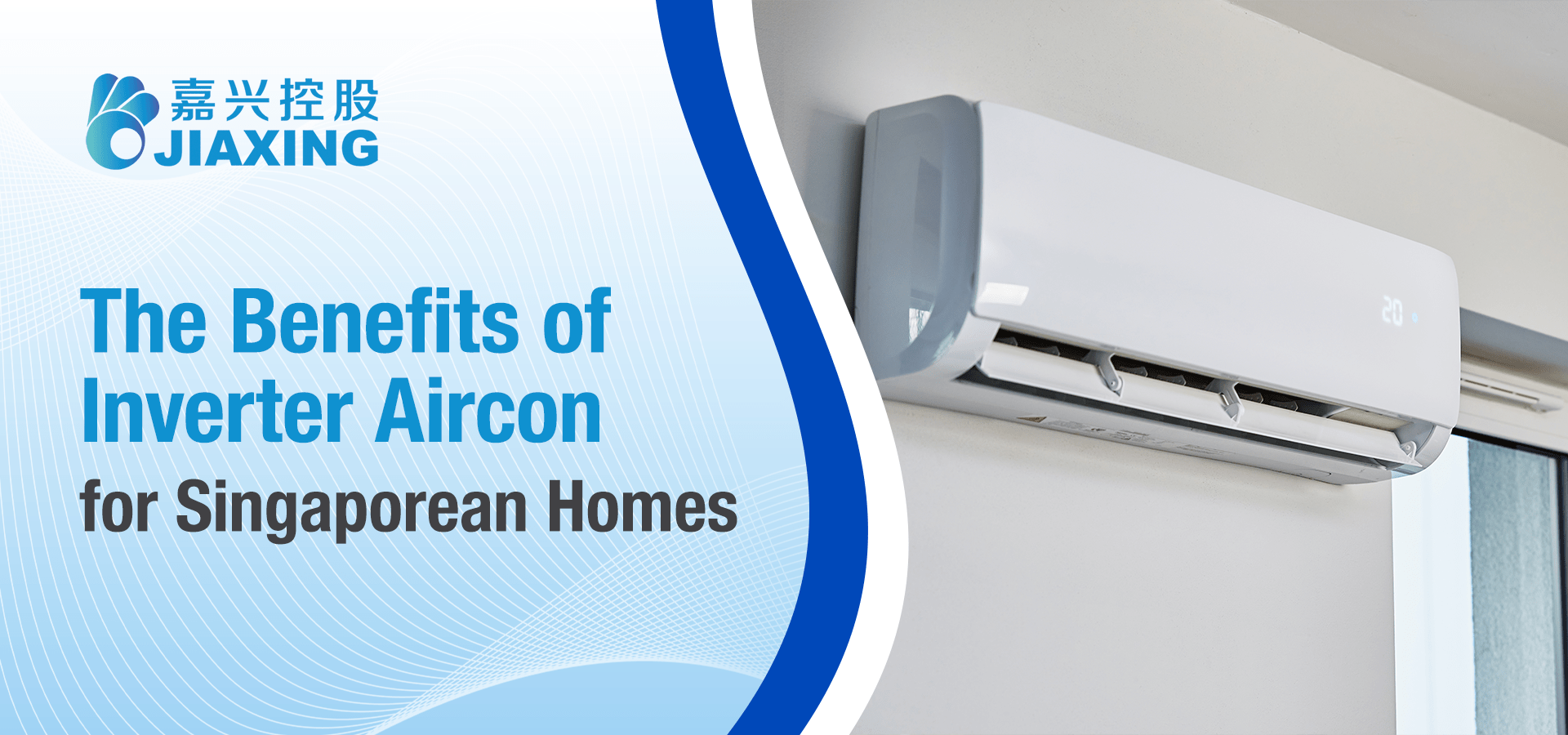
11 Aug The Benefits of Inverter Aircon for Singaporean Homes
In Singapore, switching on the aircon often feels unavoidable, especially after a hot afternoon or during a humid night. But when it runs for hours every day, the comfort can come with a noticeably higher electricity bill.
This is where an inverter air conditioner makes a difference. Instead of constantly switching between full power and completely off, it adjusts its cooling output according to the room temperature. The result is steadier cooling with less unnecessary energy use.
From lower electricity consumption to quieter operation, there are several benefits of inverter aircon for Singaporean homes. Let’s look at how it works, where the savings come from and whether it is the right choice for your home.
Table of Contents
How Does an Inverter Aircon Work?
An inverter air conditioner uses a variable-speed compressor. When the unit is first switched on, the compressor can operate at a higher output to cool the room quickly. As the room approaches the selected temperature, the system gradually reduces its compressor speed.
This differs from a conventional non-inverter air conditioner, which normally runs at a fixed output. Its compressor switches off after reaching the desired temperature and starts again when the room becomes warmer.
The frequent starting and stopping of a non-inverter system can create noticeable temperature changes and consume additional energy. An inverter system makes smaller adjustments to its cooling output, allowing it to maintain the room temperature more consistently.
In simple terms, a non-inverter aircon works like an on-and-off switch, while an inverter aircon works more like a car accelerator that adjusts its speed according to demand.
More information: The Difference Between Inverter and Non-Inverter Air Conditioner
What Are the Benefits of Inverter Air Conditioners?
1. Energy Savings
Energy efficiency is one of the main reasons Singapore homeowners choose inverter air conditioning.
An inverter compressor does not need to operate at maximum output throughout the entire cooling period. Once the selected temperature has been reached, it can slow down and use only the energy required to maintain the room’s comfort level.
This is particularly useful in Singapore, where aircon units are often used for several hours at a time. The longer a correctly sized system maintains a stable temperature, the more opportunity it has to operate efficiently at a lower output.
An inverter label alone does not guarantee lower electricity consumption. Actual energy usage depends on factors such as:
- The aircon’s capacity and energy-efficiency rating
- The size and layout of the room
- Daily operating hours
- Temperature settings
- The condition of the compressor and other components
2. Cost-Effectiveness
Inverter air conditioners usually have a higher purchase price than comparable non-inverter models. However, the cheapest unit to purchase is not always the cheapest unit to own.
For a fair comparison, homeowners should consider the complete life-cycle cost:
- Purchase price
- Installation cost
- Estimated annual electricity cost
- Routine servicing expenses
- Repair and replacement costs
- Expected years of use
Singapore’s National Environment Agency recommends comparing the life-cycle cost of appliances rather than looking only at the initial price. This includes the purchase price and estimated electricity costs over the appliance’s lifespan. (NEA energy-efficient appliance guide)
An inverter aircon may provide better long-term value when it is used for several hours daily. For a spare room where the aircon is switched on only occasionally, it may take much longer for energy savings to offset the higher purchase price.
3. Temperature Stability
A common benefit of inverter air conditioning is more consistent temperature control. Because the compressor can adjust its speed, the system does not need to wait for the room to become noticeably warmer before cooling starts again. It makes smaller and more frequent adjustments to maintain the selected temperature. This reduces the hot-and-cold fluctuations often associated with fixed-speed systems.
Temperature stability does not mean every part of a room will feel exactly the same. Furniture placement, direct sunlight, airflow obstructions and room layout can still cause uneven cooling. Correct installation and air distribution remain important.
4. Faster Cooling and Heating
An inverter air conditioner can increase its compressor output when cooling demand is high. This allows the system to bring a warm room closer to the selected temperature more quickly before reducing its operating speed.
For Singaporean homes, faster cooling is the relevant benefit because most residential systems are cooling-only models. Some inverter systems in other markets also provide heating through heat-pump technology, but heating is rarely required in Singapore’s tropical climate.
5. Quieter Operation
Repeated compressor starts can create noticeable changes in operating sound. An inverter compressor usually runs more steadily and can reduce its speed after the room has cooled.
This can result in quieter operation, particularly when the aircon is maintaining the temperature rather than cooling at full capacity. It is a practical benefit for people who are sensitive to noise while sleeping, studying or attending online meetings.
However, an inverter aircon should not be assumed to be completely silent. Indoor fan speed, outdoor compressor placement, loose components, dirty filters and installation quality can all affect noise levels.
6. Longevity and Durability
An inverter aircon system reduces repeated full-power compressor starts by adjusting its output more gradually. This smoother operation may help reduce mechanical stress on certain components.
However, inverter technology does not make an air conditioner maintenance-free. Its durability still depends on installation quality, usage frequency, electrical stability and the regular cleaning of filters, coils and drainage systems.
Inverter air conditioners also contain electronic controls and circuit boards that can be more complex than those in basic non-inverter units. Repairs involving these components may cost more, depending on the model and the availability of parts.
The best way to support aircon longevity is to arrange proper aircon installation and regular maintenance instead of relying on the inverter feature alone.
7. Environmentally Friendly
Inverter air conditioners are a more environmentally friendly choice because they are designed to operate with greater energy efficiency. Unlike traditional air conditioners that frequently switch the compressor on and off, inverter models adjust their cooling capacity based on the room’s temperature requirements. This reduces unnecessary energy consumption and helps lower overall electricity usage.
Using less energy means fewer greenhouse gas emissions are produced from electricity generation, making inverter air conditioners a more sustainable option for homes and businesses. Many modern inverter systems also use environmentally friendly refrigerants that have a lower impact on the environment.
By choosing an inverter air conditioner, users can enjoy a comfortable indoor environment while reducing energy waste and supporting more sustainable cooling solutions.

How to Maximise the Benefits?
1. Choose the Correct Aircon Capacity:
Select a cooling capacity that matches your room size, layout and sunlight exposure. An undersized unit may run continuously, while an oversized unit may cool unevenly and waste energy.
2. Set the Temperature to 25°C or Higher:
Keeping the temperature around 25°C provides comfortable cooling without placing unnecessary strain on the compressor. Lower settings can increase energy consumption without cooling the room significantly faster.
3. Keep Doors and Windows Closed:
Close all doors and windows while the aircon is running to prevent cool air from escaping. Curtains or blinds can also reduce heat entering through windows.
4. Clean the Filters Regularly:
Dusty filters restrict airflow and force the system to work harder. Regular cleaning helps maintain cooling performance, improve indoor air quality and reduce energy consumption.
5. Arrange Professional Aircon Servicing:
Routine servicing keeps the coils, drainage system and internal components in good condition. It can also identify leaks or worn parts before they cause expensive repairs.
Understanding Singapore’s NEA Energy Label
The NEA energy label helps consumers compare the efficiency of different air conditioner models.
The label includes:
- The number of energy-efficiency rating and ticks
- Annual energy consumption
- Annual energy cost
- The model and product details
- Registration Number
In general, more ticks indicate greater energy efficiency. The estimated annual cost provides a more useful comparison than purchase price alone because a cheaper unit may cost more to operate over several years.
NEA calculates the annual energy cost for household air conditioners using standardised assumptions, including eight hours of daily use. Your actual bill may differ based on electricity prices, household habits and room conditions.
When comparing two inverter aircon systems, review both the tick rating and estimated annual energy cost. Also ensure that the listed system combination matches the indoor and outdoor units you intend to purchase.
Frequently Asked Questions
1. How Often Should an Air Conditioner Turn On and Off?
A non-inverter aircon normally switches its compressor on and off as the room temperature changes. An inverter aircon may continue running at a lower speed after reaching the selected temperature.
2. How Many Hours Must I Use It to See Savings?
There is no guaranteed number of hours because savings depend on the model, room conditions, temperature setting and electricity tariff. Inverter systems generally have more opportunity to save energy during longer, steady periods of use. Households that operate air conditioning for several hours every night are more likely to notice a difference than those using it briefly or occasionally.
3. Is Inverter Aircon More Expensive to Repair?
It can be. Inverter systems use more advanced electronic controls, and repairs involving the inverter board or compressor may cost more than repairs for a basic non-inverter unit.
4. What Temperature Saves the Most Electricity?
Singapore’s Energy Market Authority (EMA) recommends setting the aircon to 25°C or higher, as a moderate temperature reduces energy consumption and the workload on the compressor.
5. What Inverter Aircon Capacity Is Suitable for My Room?
A small bedroom may require approximately 9,000 BTU/h, while a larger bedroom may need around 12,000 BTU/h. Living rooms and open-plan areas may require 18,000 BTU/h or more.Room area alone is not enough to determine the correct capacity. Ceiling height, window size, afternoon sunlight, occupancy and heat-generating appliances should also be considered. A professional site assessment provides a more reliable recommendation.
Conclusion
The benefits of inverter aircon for Singaporean homes go beyond lower electricity consumption. A correctly selected inverter system can provide stable temperatures, quicker cooling, quieter operation and better long-term energy efficiency.
The final result depends on more than the technology itself. Correct capacity selection, professional installation, sensible temperature settings and regular servicing all play an important role.
Instead of choosing an air conditioner based only on its price or inverter label, compare its NEA tick rating, estimated annual energy cost, capacity, warranty and suitability for your household’s usage.

Find the Right Inverter Aircon for Your Home
Not sure which aircon capacity or system configuration suits your space? Jiaxing Aircon can assess your cooling needs and recommend an energy-efficient inverter aircon for your home.
Contact Jiaxing Aircon today for professional advice, installation support and a personalised quotation.
Sorry, the comment form is closed at this time.