


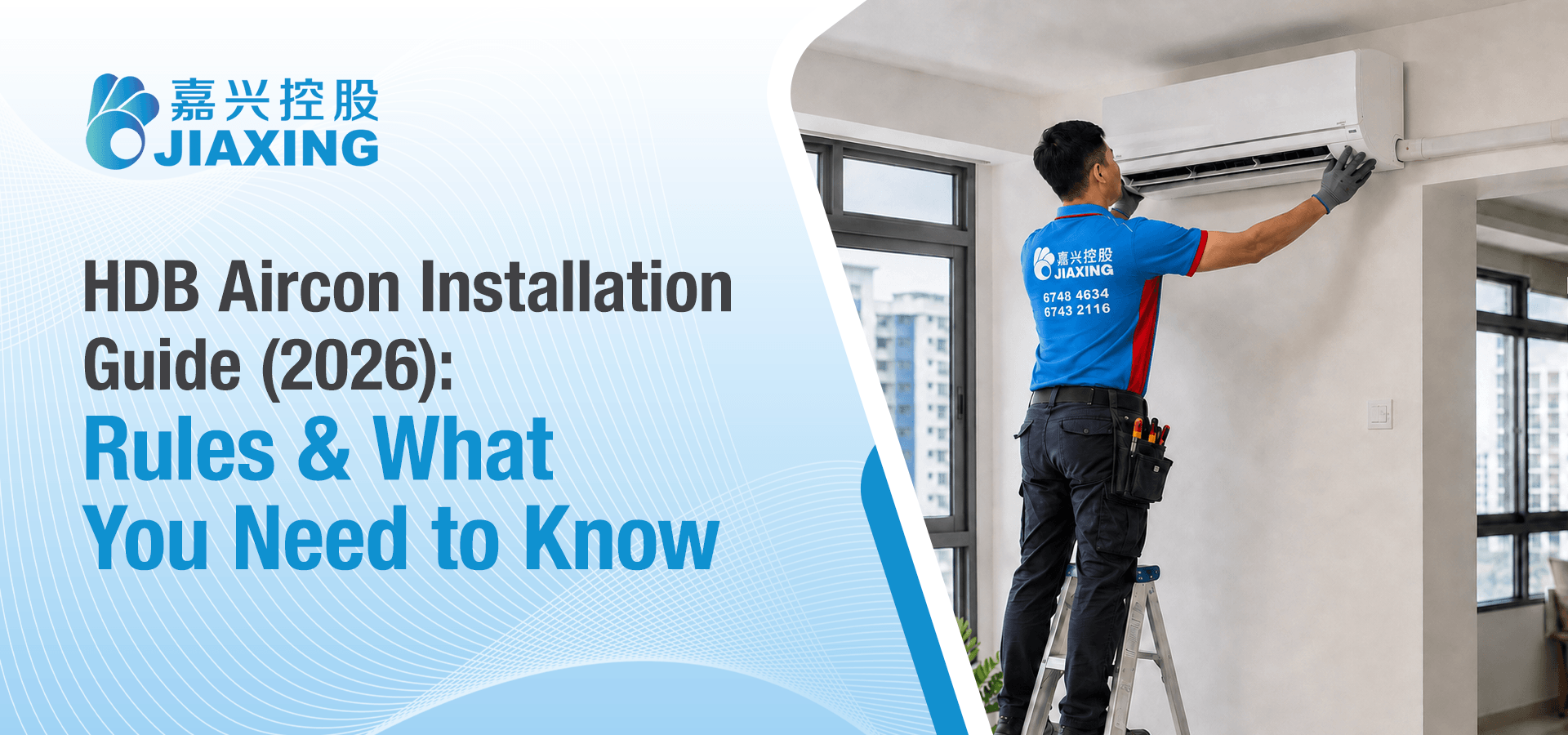
18 Aug HDB Aircon Installation Guide (2026): Rules & What You Need to Know
Installing aircon in an HDB flat sounds simple until you start hearing different advice from contractors, neighbours, and renovation forums. Some people say you need HDB approval. Others say you can install straight away. The correct answer depends on your flat’s electrical loading, where the outdoor unit will be placed, and whether the work involves new wiring or changes to the building exterior.
For most standard split-system aircon installations in modern HDB flats, you usually do not need to apply for a renovation permit when the condenser is placed on the approved aircon ledge and no structural changes are involved. But that does not mean anything goes. HDB, BCA, EMA, and NEA all have rules that affect how aircon installation in Singapore should be planned and carried out.
This guide explains the HDB aircon installation rules, how much it may cost in 2026, and the common mistakes that lead to poor cooling, aircon leaking water, or early aircon repair problems.
Table of Contents
Key HDB Aircon Installation Rules to Follow
1. Use the approved aircon ledge
The outdoor condenser should be placed at the designated aircon ledge or approved location for the flat. It should not protrude beyond the allowed area, obstruct common spaces, or be mounted in a non-approved way. This is one of the first things a proper site survey should confirm.
2. Keep drainage inside and properly sloped
Condensate water should be discharged properly through the internal drainage route, usually towards a floor trap or approved waste outlet. Poor drainage slope or an incorrectly routed drain pipe are some of the most common reasons a new system starts leaking within weeks. Good drainage planning is part of professional aircon installation, not an afterthought.
3. Avoid structural hacking
Do not let anyone hack reinforced concrete walls, beams, columns, or other structural elements just to hide trunking. Concealed piping may look cleaner, but it must be planned within HDB rules and building limitations.
4. Use proper electrical protection
Aircon systems should not be casually added to an overloaded circuit. Where new wiring or new power points are required, get an EMA Licensed Electrical Worker involved. This helps reduce tripping risks and improves installation safety.
5. Choose an NEA-registered model
NEA’s energy label helps homeowners compare energy efficiency. More ticks generally mean better efficiency and lower running costs over time. This is especially useful in Singapore, where many households run aircon daily.
Choosing the Right Aircon System for an HDB Flat
The right system depends on how many rooms you cool, room size, sun exposure, household habits, and whether the living room is included. As a rough guide, many HDB homeowners choose System 2 for two bedrooms, System 3 for two bedrooms plus living room or three bedrooms, and System 4 when most rooms need cooling.
Avoid choosing purely by price. An undersized unit may run constantly without cooling the room properly, while an oversized unit may cool too fast without removing humidity well. This is why a proper site assessment is important before buying the equipment.
Common Mistakes That Cause Problems Later
- Poor drainage route. Water should flow smoothly by gravity. If the pipe is flat or bent upward, leaks are likely.
- Weak insulation. Poor insulation can cause condensation, stained walls, and repeated service calls.
- Bad condenser clearance. The outdoor unit needs enough airflow for heat rejection and servicing access.
- Skipping electrical checks. Aircon loads should be planned properly, especially in older flats.
- No maintenance plan. After installation, regular aircon servicing keeps filters, coils, drains, and fan coils clean.
After Installation: Maintenance Matters
A good installation reduces problems, but it does not remove the need for maintenance. In Singapore’s humid climate, filters clog quickly, drainage lines collect dirt, and fan coils can develop mould if they are neglected. For homes that use aircon almost daily, booking aircon servicing singapore every three to four months is a practical routine.
If your aircon is no longer cold, smells musty, leaks water, or makes unusual noise, get it checked early. Waiting too long can turn a small cleaning issue into a more expensive repair. In some cases, a normal cleaning service is enough; in others, a deeper chemical wash or repair may be needed.
Frequently Asked Questions
1. Do I need HDB approval before installing aircon?
Usually no, if it is a standard split-system installation on the approved aircon ledge and no structural or major electrical changes are involved. Older flats or installations requiring new power points, new isolators, or non-standard placement may need additional checks or permits.
2. Who is allowed to install aircon in HDB flats?
Use a BCA-trained air-conditioning unit installer for exterior or projecting units. If the job involves wiring, rewiring, new power points, or electrical modification, an EMA Licensed Electrical Worker should carry out or supervise that electrical work.
3. Can I install the outdoor unit anywhere on my flat exterior?
No. The condenser should be installed only at the approved aircon ledge or approved location. Non-standard placement on the facade, common areas, or unsupported locations can create safety and compliance issues.
4. How much does HDB aircon installation cost in 2026?
Want to find out more about aircon installation and pricing? Explore our latest aircon products and available options.
5. How often should I service my HDB aircon?
For daily use, many households arrange aircon maintenance in Singapore every three to four months. Regular servicing helps prevent water leaks, weak cooling, mould smell, and unnecessary repair costs.

Ready to Install Aircons in Your HDB?
If you are planning aircon installation for HDB flat, Jia Xing Aircon can help assess your layout, recommend the right system size, plan drainage properly, and keep the work aligned with Singapore requirements.
Sorry, the comment form is closed at this time.