


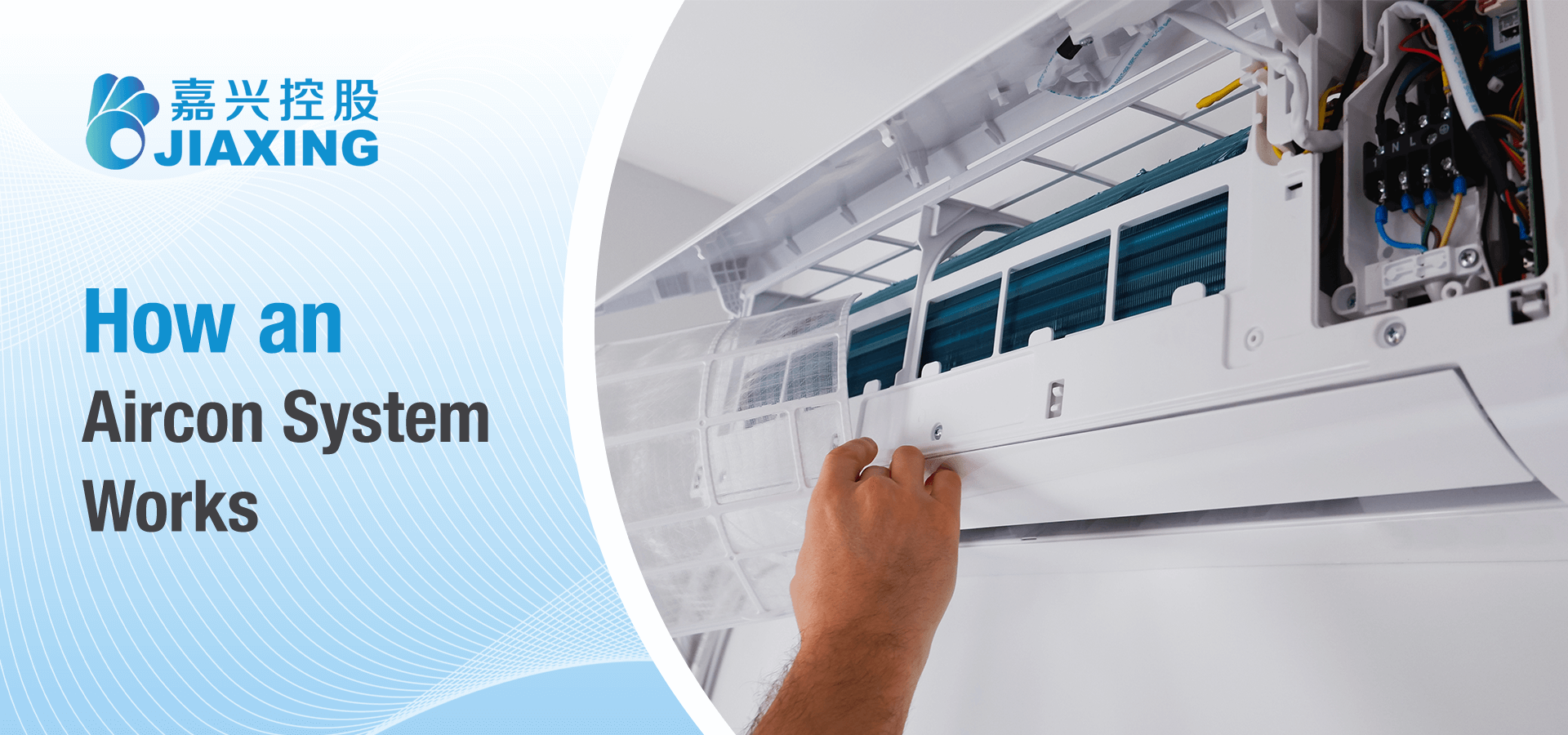
02 Dec How an Aircon System Works: A Simple Guide for Homeowners
Air conditioning has become part of our daily life. We switch it on every day, but most people are not sure what actually happens inside the system. Understanding the basics helps you make better choices, spot small problems early, and keep your aircon running smoothly for years. If you have ever wondered how does air conditioning works, why your aircon stops cooling, leaks water, or starts making strange noises, knowing what happens inside the system will make everything much easier to understand.
This guide walks you through the entire cooling process using simple explanations that anyone can follow.
Table of Contents
The Cooling Concept
Many people think an air conditioner produces cold air. In reality, an aircon does not create cold air out of nowhere. Instead, it removes heat from your indoor space and releases it outside. Once the heat is removed, the air automatically feels cooler.
A simple way to imagine this is to think of the aircon as a heat transporter. It picks up heat inside your home, carries it outdoors, and repeats the cycle until your room reaches the temperature you set. This entire process is powered by refrigerant moving through different components inside the system.
Key Components Inside Every Aircon System
Even if aircon models look different on the outside, the inner structure works in a similar way. Here are the main parts that make cooling possible.
1. The Compressor
The compressor is the heart of the aircon system. It pumps the refrigerant throughout the pipes and increases its pressure so it can release heat efficiently. When the compressor works well, cooling becomes fast and stable. When it gets weak or damaged, the system often becomes noisy and the air feels less cold.
2. The Condenser Coil (Outdoor Unit)
Once the compressor increases the pressure of the refrigerant, the hot refrigerant flows into the condenser coil located in the outdoor unit. This is where heat from inside your home is released into the outdoor air. A fan blows across the condenser coil to speed up the heat removal process. If this coil gets dirty, the system needs to work harder which increases your electricity bill.
3. The Evaporator Coil (Indoor Unit)
This is the part inside your room. When warm indoor air passes through the evaporator coil, the refrigerant absorbs the heat and cools the air immediately. If this coil is covered with dust or ice, airflow becomes weak and cooling drops significantly.
4. The Refrigerant
Refrigerant is the substance that absorbs and releases heat in the aircon system. It flows between liquid and gas form depending on where it is in the cooling cycle. A low refrigerant level is usually caused by leaks. A normal aircon does not run out of gas unless there is leakage.
5. Fans and Air Filters
Fans push air across both coils. The indoor fan blows cool air back into your room, while the outdoor fan helps release heat. Air filters keep dust from entering the system, support stronger airflow, and help maintain good indoor air quality. A clogged filter is one of the most common reasons for weak airflow and noisy operation.
6. Drainage System
As the air cools, moisture from the air turns into water droplets on the evaporator coil. This water flows into a drain pan and exits through a drainage pipe. If the pipe is clogged, water starts to drip from the indoor unit.
Step-By-Step: What Happens When You Turn On the Aircon
Step 1: Warm air from your room is pulled into the aircon.
The indoor fan draws warm air through the air filter and into the evaporator coil.
Step 2: The evaporator coil absorbs heat.
The refrigerant inside the coil absorbs the heat, leaving the air cooler.
Step 3: The refrigerant carries the heat to the compressor.
The refrigerant travels through pipes to the outdoor unit.
Step 4: The outdoor unit releases the heat.
At the condenser coil, the heat is thrown out into the environment with help from the outdoor fan.
Step 5: Cool air flows back into your room.
The indoor fan sends cool, refreshed air back into your space.
Step 6: The cycle repeats until your desired temperature is reached.
Once the room matches your setting, the aircon slows down or pauses depending on whether you use inverter or non-inverter units.
How Humidity Control Works
Cooling is only half the story. A good aircon also removes moisture from the air. When warm humid air touches the cold evaporator coil, water droplets form. These droplets flow into the drainage system. That is why an aircon often reduces the sticky, uncomfortable feeling in the room.
If humidity remains high, your room may feel cold but not comfortable. This usually happens when the drainage pipe is clogged, the coil is dirty, or the system is low on refrigerant. Fresh airflow and a clean coil are key to proper dehumidification.
Why Basic Maintenance Plays a Huge Role in How Your Aircon Works
Even the best aircon won’t perform well if it’s neglected. Regular aircon maintenance in Singapore is already a common practice because it works like a routine check-up for your unit. It keeps the system running smoothly and stops small issues from turning into costly repairs. Dust and dirt can block air filters and coils, which makes the system work harder just to cool the same amount of air. That not only reduces efficiency but also drives up your electricity bill.
A simple cleaning of the air filter, checking the drainage pipe, and ensuring the coils are free from grime can make a huge difference. It keeps airflow strong, ensures the refrigerant can do its job properly, and prevents common problems like aircon leaking water or uneven cooling. In short, spending a little time on basic upkeep keeps your aircon efficient, prolongs its lifespan, and ensures every part of the system works as it should.
Conclusion
Air conditioning might look complicated from the outside, but the actual process is very logical. The system absorbs heat, moves it outdoors, and sends cool air back inside. When every component works smoothly, you get steady cooling, lower electricity usage, and a more comfortable living environment. Knowing how your aircon system works also helps you understand common problems before they become serious.

Refresh Your Aircon, Refresh Your Comfort
If your aircon feels weak, noisy, or less cooling than before, it might be time for a service. Regular cleaning and inspection help your system perform at its best and last longer. Reach out anytime if you need professional aircon servicing or want help choosing the right system for your home.
Sorry, the comment form is closed at this time.